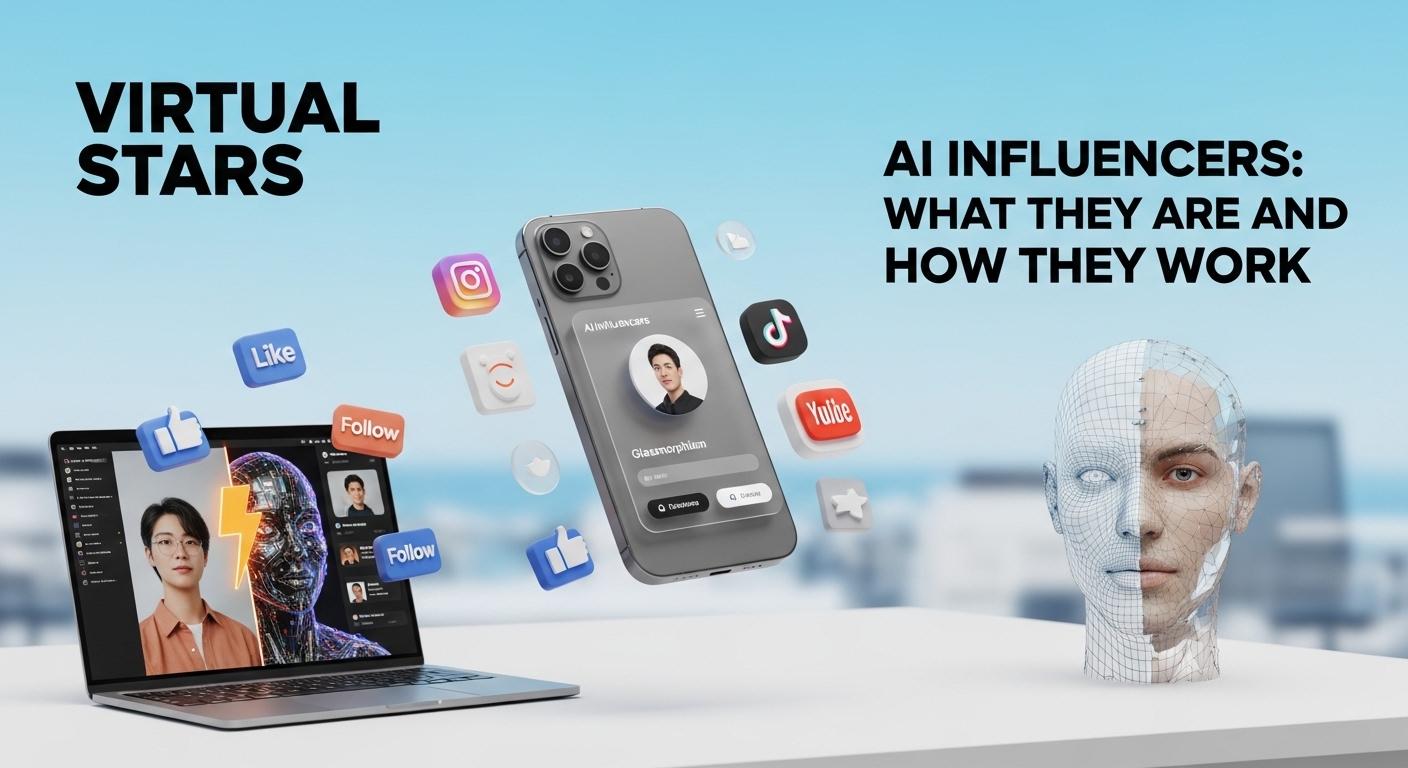
AI Influencers: What They Are and How They Work

Chukwunyere Ebube
April 10, 2026
AI Influencers: What They Are and How They Work
Influencer marketing has taken an unexpected turn in recent years. Beyond human creators, brands and audiences are now engaging with AI influencers—digital personas powered by artificial intelligence that create content, interact with followers, and even drive campaigns.
From fashion brands collaborating with virtual models to AI personalities running their own Instagram accounts, AI influencers are reshaping the creator economy. They combine the reach of traditional influencers with the precision, scalability, and creativity of AI technology.
According to Influencer Marketing Hub, AI-driven marketing campaigns are projected to grow rapidly in 2026, offering brands new ways to connect with audiences without the unpredictability of human influencers.
In 2025, a major fashion brand launched a new collection using a virtual AI influencer. Named Lil Miquela, the AI created content, posted across Instagram and TikTok, and interacted with fans as if she were real. The campaign achieved engagement rates comparable to top human influencers and sparked global conversation—without any physical photoshoots.
This example illustrates that AI influencers are not just novelties; they are strategic tools for modern marketing, blending creativity, automation, and analytics.
By the end of this guide, you’ll understand exactly what AI influencers are, how they operate, and how businesses can leverage them for scalable engagement, marketing campaigns, and brand growth.
So, what exactly is an AI influencer, and how do brands use them to drive influence in a crowded digital landscape?
What Is an AI Influencer?

An AI influencer is a virtual persona created and managed using artificial intelligence technologies. Unlike human influencers, AI influencers:
- Generate content automatically or semi-automatically
- Interact with followers using natural language processing (NLP)
- Maintain social media profiles across platforms
- Can simulate personality, style, and creativity
Some AI influencers are fully autonomous, while others are guided by human teams to ensure brand alignment.
How AI Influencers Work
AI influencers operate at the intersection of computer vision, NLP, and machine learning. Here’s a breakdown:
1. Content Creation
AI tools can generate:
- images (virtual photos, fashion renders)
- videos (short clips, TikTok-style posts)
- text captions, blog posts, and social media copy
Tools like Runway AI and OpenAI GPT help generate content automatically while preserving brand voice.
2. Audience Interaction
AI influencers use chatbots and NLP to:
- reply to comments
- answer messages
- participate in live sessions
This ensures 24/7 engagement without human limitations.
3. Performance Analytics
AI influencers track engagement metrics in real-time:
- likes, shares, comments
- click-throughs and conversions
- sentiment analysis
This data helps brands optimize campaigns efficiently.
4. Customization and Personality
AI influencers can be programmed with distinct personalities, styles, and opinions to align with target demographics. Brands can choose a playful, serious, or niche-specific persona to match their marketing strategy.
Benefits of Using AI Influencers
1. Scalability
AI influencers can operate across multiple platforms simultaneously without fatigue.
2. Cost Efficiency
Eliminates expenses like photoshoots, travel, and influencer management fees.
3. Consistency
Content quality and brand messaging remain consistent across campaigns.
4. Creativity
AI can generate novel content ideas using algorithms and trend analysis.
5. Data-Driven Insights
Real-time metrics allow precise campaign optimization.
Use Cases of AI Influencers
Fashion and Lifestyle
Brands like Prada and Balenciaga have used AI influencers for digital runway shows and marketing campaigns.
Gaming
AI characters promote games on Twitch and YouTube, engaging users directly with interactive content.
Music and Entertainment
AI influencers release music, host virtual concerts, and interact with fans across social media.
Business and Marketing
Brands use AI influencers for lead generation, product launches, and virtual events.
Potential Challenges
1. Authenticity
AI influencers may lack genuine human experiences, which can affect trust.
2. Ethical Concerns
The use of AI personalities raises questions about transparency and audience manipulation.
3. Over-Saturation
As more brands adopt AI influencers, standing out may become harder.
4. Technical Complexity
Creating sophisticated AI personas requires advanced technology and expertise.
Can AI influencers replace human creators?
Not entirely. AI influencers complement rather than replace human creators. They are ideal for scalable campaigns, repetitive content, and data-driven marketing. Human influencers remain vital for authentic, emotional connections.
Platforms like Adminting integrate human creators with AI-assisted performance analytics, combining the strengths of both worlds.
How Businesses Can Use AI Influencers Effectively
- Integrate AI with Human Teams – Use AI for content generation and analytics while humans manage strategy and storytelling.
- Focus on Niche Communities – AI can amplify messaging in specific segments.
- Leverage Performance Metrics – Track engagement, conversions, and ROI to optimize campaigns.
- Test and Iterate – Continuously refine AI persona and content based on audience feedback.
- Align with Brand Values – Ensure AI behavior, tone, and messaging reflect your brand identity.
Conclusion
AI influencers are no longer science fiction—they are an emerging tool in the creator economy. They enable scalable engagement, data-driven campaigns, and cost-efficient marketing, particularly for brands and creator-led businesses seeking consistency and innovation.
The best results come from blending AI with human creativity, using AI for performance optimization and content generation while maintaining human authenticity.
For businesses looking to experiment with AI influencer campaigns, platforms like Adminting can provide the infrastructure to integrate AI-assisted performance tracking with real-world creator networks, giving you the tools to run campaigns that are both innovative and outcome-driven.
FAQ
Q: What is an AI influencer?
A: A digital persona created with AI that can generate content, interact with followers, and represent a brand or niche online.
Q: Can AI influencers engage audiences like humans?
A: Yes, AI influencers can respond to comments, create posts, and even hold conversations using NLP and chatbots.
Q: Are AI influencers cost-effective?
A: Often, yes. They reduce operational costs such as travel, photoshoots, and human management.
Q: Should brands completely replace human influencers with AI?
A: No. AI works best as a complement to human creators, not a replacement.
References
- Influencer Marketing Hub — AI Influencer Report (2026)
- Runway AI Documentation (2025)
- OpenAI GPT Documentation (2025)
- Lil Miquela Case Study (2025)
Recommendation
For further reading, explore:
- Performance Marketing for Influencer-Driven Businesses
- Open Source vs SaaS Creator Payment Platforms
- Best Creator Marketplace Platforms for Monetization
To implement AI-driven influencer campaigns alongside human creators, visit Adminting to access performance-based campaigns, audience analytics, and scalable marketplace infrastructure.